
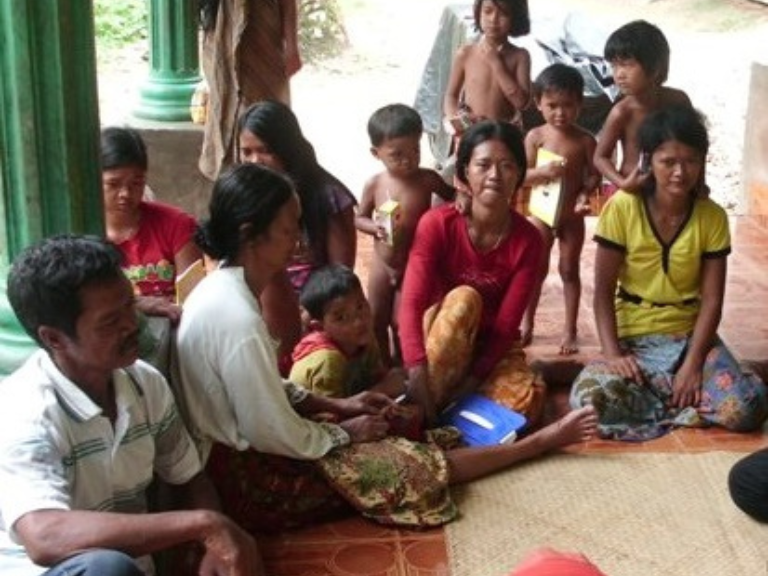
The visit to the Anak Dalam Tribe in Sarolangun, Jambi, was not merely a cultural encounter but also an academic exploration designed to assess financial literacy within indigenous families. Situated deep within the forest, the Anak Dalam community continues to preserve its traditional way of life while gradually engaging in limited economic exchanges with surrounding societies. This field visit was structured as both a dialogue and a survey, aiming to capture how financial practices are understood and applied in the daily lives of the families.
The survey revealed that while some families are familiar with basic concepts of trade, such as selling forest products including rattan and honey, the idea of systematic financial management remains relatively unfamiliar. Expenditures are often carried out immediately upon receiving income, without processes of saving, recording, or separating household needs from future-oriented financial planning. These findings highlight a crucial gap in financial literacy, particularly regarding the concepts of budgeting and long-term economic security.
Rather than attempting to alter long-standing cultural traditions, the purpose of this academic inquiry was to identify feasible ways of introducing financial literacy as a form of empowerment. Simple practices such as documenting daily expenses, setting aside small portions of income for savings, or recognizing the economic value of local resources may serve as accessible entry points for strengthening financial resilience. Importantly, such interventions must be carefully contextualized to ensure alignment with the community’s cultural norms and values.
This initiative aligns with the United Nations Sustainable Development Goal 4 on Quality Education, emphasizing inclusive and equitable access to education, and also supports Goal 8 on Decent Work and Economic Growth. According to the Global Findex Database 2025, an estimated 1.3 billion people worldwide remain unbanked, reflecting a global challenge to financial inclusion. By linking the local experiences of the Anak Dalam Tribe with this broader global context, the survey underscores the urgency of accelerating access to financial services. Empowering marginalized groups with financial literacy is not only an educational priority but also a vital step toward reducing global inequality and promoting sustainable development.